

Big ideas, bold solutions: inside the 10th AMR Conference

Robert Hausmann, Eventfotografen / bamconn GmbH
The 10th AMR Conference in Basel once again brought together some of the most passionate minds in antimicrobial research, policy, and innovation. This year’s edition was particularly energizing, not only because of the scientific progress shared, but also because of the growing sense of momentum across the entire AMR community.
A powerful start: tackling P. aeruginosa together
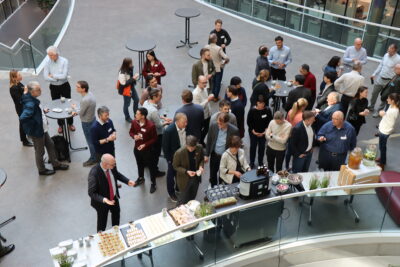 For INCATE, the conference season began with a focused pre-conference workshop on “Development of New P. aeruginosa Interventions.” Our goal was simple but powerful: bring together leading experts and innovators, spark meaningful discussions, foster new collaborations, and accelerate the development of urgently needed solutions. And the result was exactly the kind of dynamic environment we hoped for. The attendees exchanged insights on scientific challenges, regulatory hurdles, and development pathways for tackling one of the most persistent and dangerous bacterial pathogens.
We are deeply grateful to the ETH Department of Biosystems Science and Engineering (D-BSSE) for providing such an excellent venue for the workshop, to NCCR AntiResist for helping make it possible, and to the German Center for Infection Research (DZIF) for their generous sponsorship and continued support.
And most importantly, thank you to all participants and speakers who adjusted their travel plans to be there and contribute. Your commitment and expertise are what make these conversations truly impactful.
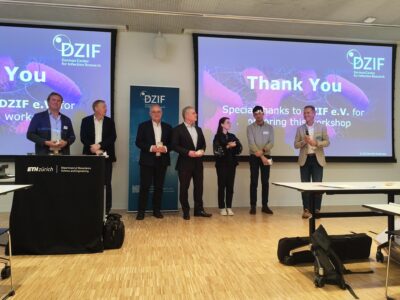 Our speakers brought an exceptional range of perspectives to the discussion:
- Kevan O’Connor and David Nichols – Cystic Fibrosis Foundation
- Glenn E. Dale – BioVersys AG
- Kurmashev Amanzhol – ETH D-BSSE
- Silvia Würstle – Universitätsmedizin Frankfurt
- Diana Stukalkina – Bioscience Valuation
- Thorsten Ulf Meyer – Granzer Regulatory Consulting & Services GmbH
The momentum continued with the NCCR AntiResist annual networking event. This year topic was “Young Scientists: Building future antibiotic expertise” and included very insightful presentations from Dr. Benjamin Sellner, Dr. A. Leoni Swart, Dr. Tim Keys, and Dr. Michel Pieren, followed by the AMR Action Fund Networking Event to round off an enriching day.
INCATE at the heart of the AMR Community
As in previous years, INCATE was present at booth #9, sharing the space with the DZIF and the Global AMR R&D Hub. But something felt different this time.
A significant number of participants came directly to the INCATE booth. This shift highlights something we’re truly proud of: INCATE is becoming a recognized and trusted organization within the AMR ecosystem. We couldn’t hope for better: it’s a meaningful recognition of the work we put in.
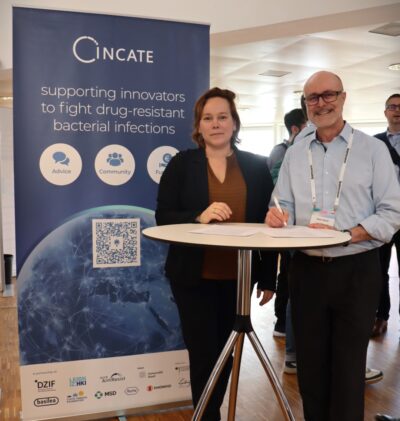 The conversations we had throughout the conference reinforced the growing recognition of INCATE’s role in supporting innovation, building partnerships, and helping move antimicrobial solutions forward.
One particularly exciting development highlighted during the meeting was our partnership with Ecraid, which represents an important step in strengthening collaboration between clinical research infrastructure and antimicrobial innovators.
Global highlights: policy, awareness, and the future of incentives
Across the conference sessions, several themes stood out.
One major discussion centered on EU pharmaceutical legislation and incentive models, including subscription models and transferable exclusivity vouchers. The goal is to centralize and build upon incentive mechanisms that individual countries have previously tried. The question many participants raised, however, remains: Is this enough?
While the proposals represent an important step forward for Europe, some argued that stronger incentives (potentially more vouchers and higher rewards) may still be necessary to truly stimulate antimicrobial innovation.
Another inspiring discussion during the conference focused on raising awareness of AMR through creative arts. Complex global challenges like antimicrobial resistance are often difficult to communicate beyond the scientific community, and storytelling can play a powerful role in making the issue more visible and relatable.
A striking example is the critically acclaimed documentary “AMR: Dying to Change the World,” directed by Alex Tweddle and featured at the Cambridge Film Festival. The film shines a light on the growing global threat of antimicrobial resistance. With Brian Cox lending his voice to personify AMR itself, the documentary creates a powerful and haunting narrative that warns of the potential return to a pre-antibiotic era.

Robert Hausmann, Eventfotografen / bamconn GmbH
During the session at the AMR Conference we also had the opportunity to watch a little performance from “Life Line,” a theatre production designed to raise awareness of AMR, takes a different route: rather than presenting a lecture, it tells a compelling story that audiences can connect with emotionally and personally. By translating a complex scientific challenge into a human narrative, it helps bring the issue closer to everyday life. And if you happen to be in London, it’s worth checking out, the premiere of Life Line takes place on March 28.
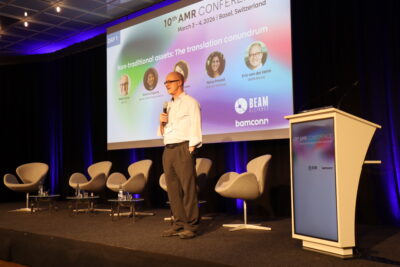 INCATE on stage
INCATE also hosted the session “Non-traditional Assets: The Translation Conundrum,” moderated by our colleague Peter Seiler. The session brought together an excellent panel to discuss how innovative antimicrobial approaches can successfully move from promising science to real clinical use.
🔹 Valeria Gigante presented an overview of the WHO antibacterial pipeline analysis, highlighting recent trends and evolutions in the development landscape.
🔹 Julia Djonova (SwissMedic) shared the regulatory perspective, discussing pathways that could support the development and access of non-traditional antibacterials.
🔹 Neha Prasad (Rubrum Advising) explored strategies to demonstrate the clinical value of these approaches, while balancing stewardship and commercial viability.
🔹 Erik van der Helm (SNIPR Biome) concluded with insights from SNIPR Biome’s journey, sharing both successes and key lessons learned.
The session highlighted both the strong potential and the translation challenges of these innovative approaches — and reinforced the growing view that the term “non-traditional” may not fully reflect their importance in the future of antimicrobial development.
Startup Pitch Event: when big ideas take the stage

Robert Hausmann, Eventfotografen / bamconn GmbH
One of the most anticipated highlights of the conference was the Startup Pitch Event, and this year it delivered in every way. With over 40 high-quality submissions, selecting the ten finalists was no easy task. When the session began, moderator Guillermo Tramontin unveiled an impressive lineup of innovators ready to present their ideas to the audience.
Each pitch brought bold ideas, creative science, and real potential for impact. The energy in the room was unmistakable as the audience listened, questioned, and ultimately voted.
The audience chose AstralytiX as the winner of this year’s Startup Pitch Event. Congratulations to the team for an outstanding presentation and a compelling vision for the future.
A special thank you goes to VOSSIUS for sponsoring this challenge for the past five years and to Guillermo Tramontin for taking on the role of moderator and guiding the session so skillfully.
Poster Competition: outstanding science on display
The Poster Competition was another standout moment of the conference.
The judging panel had an incredibly difficult task this year: the overall quality of the science was exceptional. The diversity of topics, the innovation in approaches, and the global representation of researchers demonstrated just how vibrant the AMR field has become.
Congratulations to the winners for their outstanding work and well-deserved recognition:

Robert Hausmann, Eventfotografen / bamconn GmbH
1st Prize – Shidhar Narayanan (Foundation for Neglected Disease Research)
“Development of a novel DprE1-targeting lead candidate for NTM-PD treatment”
2nd Prize – Weng Chan (University of Nottingham)
“Discovery and pre-clinical development of LY256 for the treatment of Clostridioides difficile infection”
3rd Prize – Hoan Ngo (Seoul National University)
“A New Class of Antibiotics Overcomes Multi-Drug Resistant Bacteria by Targeting Outer Layer Glycolipid Biosynthesis”
A special thank you goes to Basilea Pharmaceutica for sponsoring this competition for the second consecutive year and helping support emerging researchers in the AMR field.
Looking Ahead
The final sessions of the conference focused on the future of antimicrobial development — discussing both the persistent challenges and the promising solutions emerging across the ecosystem.
From new policy incentives to innovative therapeutic approaches, from startup energy to global collaboration, one message became clear:
The AMR community is growing stronger, more connected, and more determined than ever.
For INCATE, this year’s conference was a powerful reminder of how far we’ve come, and how important our role has become in bringing together innovators, researchers, and partners working toward the same goal.
And if the enthusiasm and creativity on display in Basel are any indication, the future of antimicrobial innovation is in very capable hands.
Many thanks to the BEAM Alliance, and a special thank you to bamconn GmbH for doing an exceptional job organizing such a great event—it’s always a pleasure to work together. We’re already looking forward to the next edition.
See you in Basel on March 23–24, 2027, for the 11th AMR Conference.